Most Mediterranean cruises benefit from time before or after the sailing, but the right answer depends on where the ship starts or ends and what you actually want from Europe.
The mistake is treating those hotel nights as an add-on. They can affect flight risk, transfer complexity, sightseeing time, and whether the entire trip feels relaxed or rushed.
I plan Europe and cruise journeys for clients and travel there myself, so I look at the land days and the cruise as one itinerary, not separate reservations.
The cruise may be the centerpiece, but the days around it often determine how the whole trip feels.
I have been working on a Mediterranean cruise trip for clients this week, and in conversation with them, we got to one of the questions that comes up all the time:
“How many days should we add in Europe before and after our cruise?”
As a travel advisor and owner of Adventure the World Travels, LLC, I spend a lot of time helping clients build cruise-and-land trips.
Once we choose the cruise, that part is pretty straightforward. We have a start date and an end date. We know the ship. We know the ports. But then we have to figure out everything that goes with it.
I call these the pre- and post-stays. These are the days we build onto the beginning and end of the cruise, and honestly, they can become some of the best parts of the entire trip.
How many nights should you add?
For most Mediterranean cruises, I recommend at least two nights before your cruise.
Three nights is even better if you actually want to explore the city you are sailing from.
And if you want to turn your Mediterranean cruise into a true cruise-and-land vacation, four to seven nights before and/or after the cruise can make a lot of sense.
After the cruise, two or three nights is often enough if you want to explore the city where the ship ends. Longer can absolutely work, but I would only add those days if there is somewhere you genuinely want to go next.
And to be honest, with airfare costing what it does these days, it just makes sense to maximize your trip value and experience.
Jet lag is real
Also, jet lag is real, and if you haven’t experienced it yet, you will.
The last thing you want to do is get off your plane, step out into a beautiful city, and then jump on your cruise, only to be tired as all heck for the first few days.
For a U.S. embarkation city and a Caribbean cruise out of Florida, arriving the day before may be perfectly reasonable.
BUT Europe is different, and I would not treat these two cruise experiences the same way.
Heading to your Mediterranean cruise, most travelers from the United States will have an overnight flight, a major time change, possible connections or pass-throughs in busy European hub airports, and the very real possibility of flight disruptions.
Add exhaustion to that, and you may also have additional border-processing steps because of EES, Europe’s Entry/Exit System.
Then there is the real sneaky issue: jet lag.
Adrenaline gets you through those first few hours, but when it hits, it hits hard.
It’s natural to think that because you arrive somewhere like Rome at 8:00 in the morning, you can spend the entire day sightseeing. But that does not necessarily mean your body is ready for it.
I always encourage my clients to give themselves some breathing room so they can get some rest, adjust a little, and be ready to fully enjoy sightseeing the next day. Then they can step onto their cruise, fresh and ready to see all that awaits them.
The port is not always the city
And let’s be realistic.
From my experience working with hundreds of clients, I can almost guarantee that if your cruise departs from Civitavecchia, you’re probably also telling me you want to see Rome.
And Civitavecchia is not Rome.
You still have to get from Rome to the cruise port, and that takes time and planning.
If your Mediterranean cruise leaves from Barcelona, you probably want to actually see Barcelona. Maybe walk Las Ramblas, explore the Gothic Quarter, eat some tapas, and enjoy the city.
You probably do not want your entire Barcelona experience to consist of the airport, a hotel room, and the ride to the ship.
Athens deserves more than a pit stop as well.
I mean, who doesn’t want time to wander through the Plaka and see some of the incredible ancient sites surrounding the Acropolis instead of just seeing them through a transfer-window blur?
These are the things people do not always consider when booking a cruise.
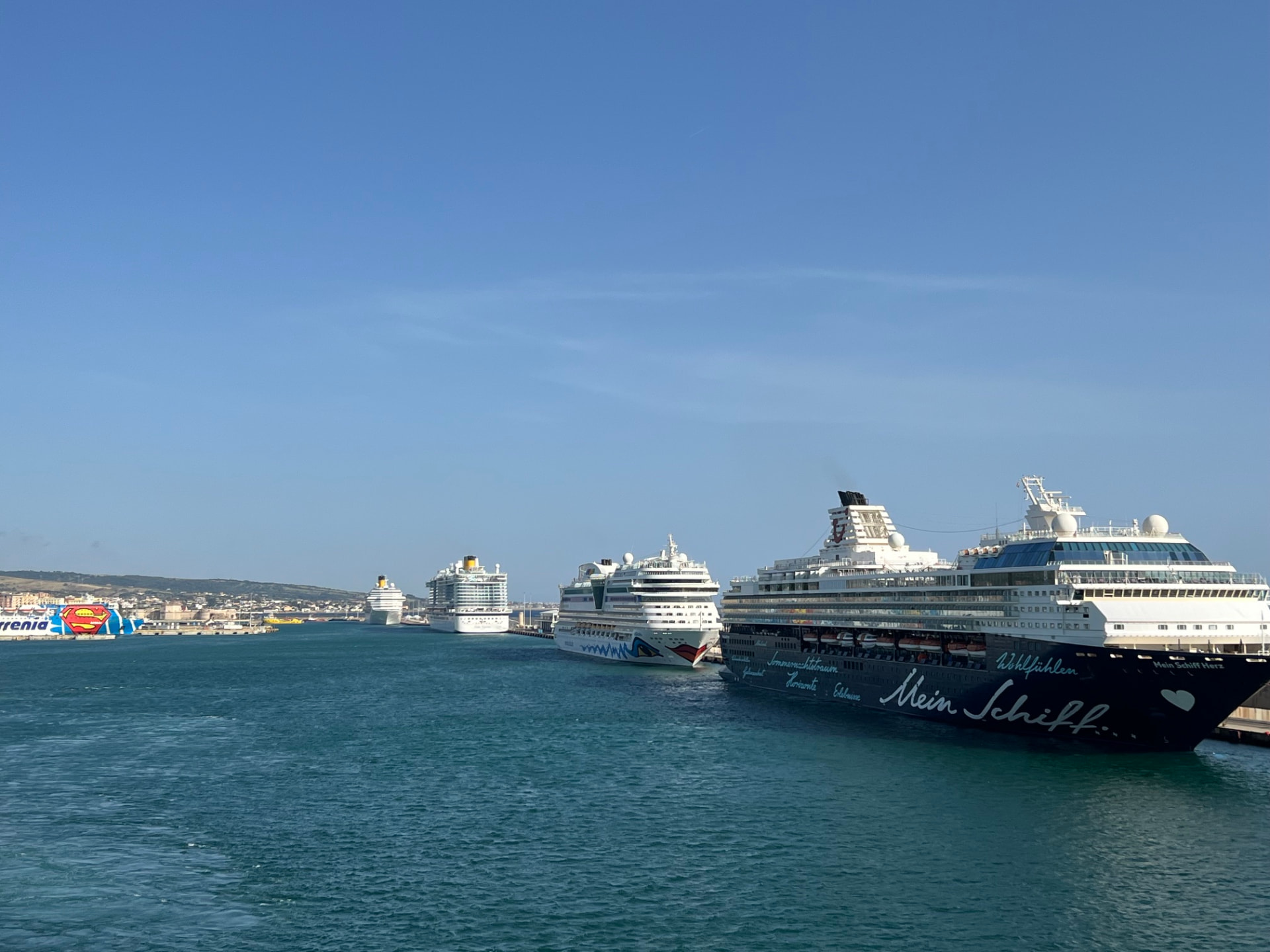
The city listed on your cruise itinerary is not always where the ship is actually sailing from.
Rome cruises generally use Civitavecchia, which is well outside Rome. Athens cruises usually use Piraeus, which is outside the historic center. Barcelona’s cruise terminals are much closer, but you still have to account for getting yourself and your luggage from the hotel to the correct terminal.
There is almost always another logistics piece between sightseeing and boarding the ship.
When you have 4 to 7 extra nights
If your schedule allows it, I really like it when clients can extend their Mediterranean cruise by 4 to 7 nights.
THIS is when we really get to roll up our sleeves and create that full cruise-and-land vacation, combining the Mediterranean cruise with a great land experience.
With this extra time, we can start adding another city or region instead of just staying near the cruise port.
Italy is a perfect example because this is where I see people start trying to squeeze in everything.
Someone finds a cruise sailing from Rome and starts thinking:
“Well, we’re already going to Italy...”
Which very quickly becomes:
- “Can we do Rome?”
- “And Florence?”
- “And Tuscany?”
- “And Venice?”
- “And maybe the Amalfi Coast, too?”
Sure ... but not in three days.
This is where I spend a lot of time helping clients decide what they actually want the trip to feel like.
You can absolutely combine a Mediterranean cruise with several days exploring Italy.
But if you try to race through four different parts of the country before boarding the ship, you will spend a lot of your vacation packing, checking out, getting on trains, checking in, and figuring out where your luggage needs to be next instead of actually seeing and experiencing the cities you wanted to visit in the first place.
I am fairly certain that this is NOT the memory my clients are trying to create.
Sometimes I would much rather give you three really good nights in Rome than one rushed night in Rome, one in Florence, and one somewhere else.
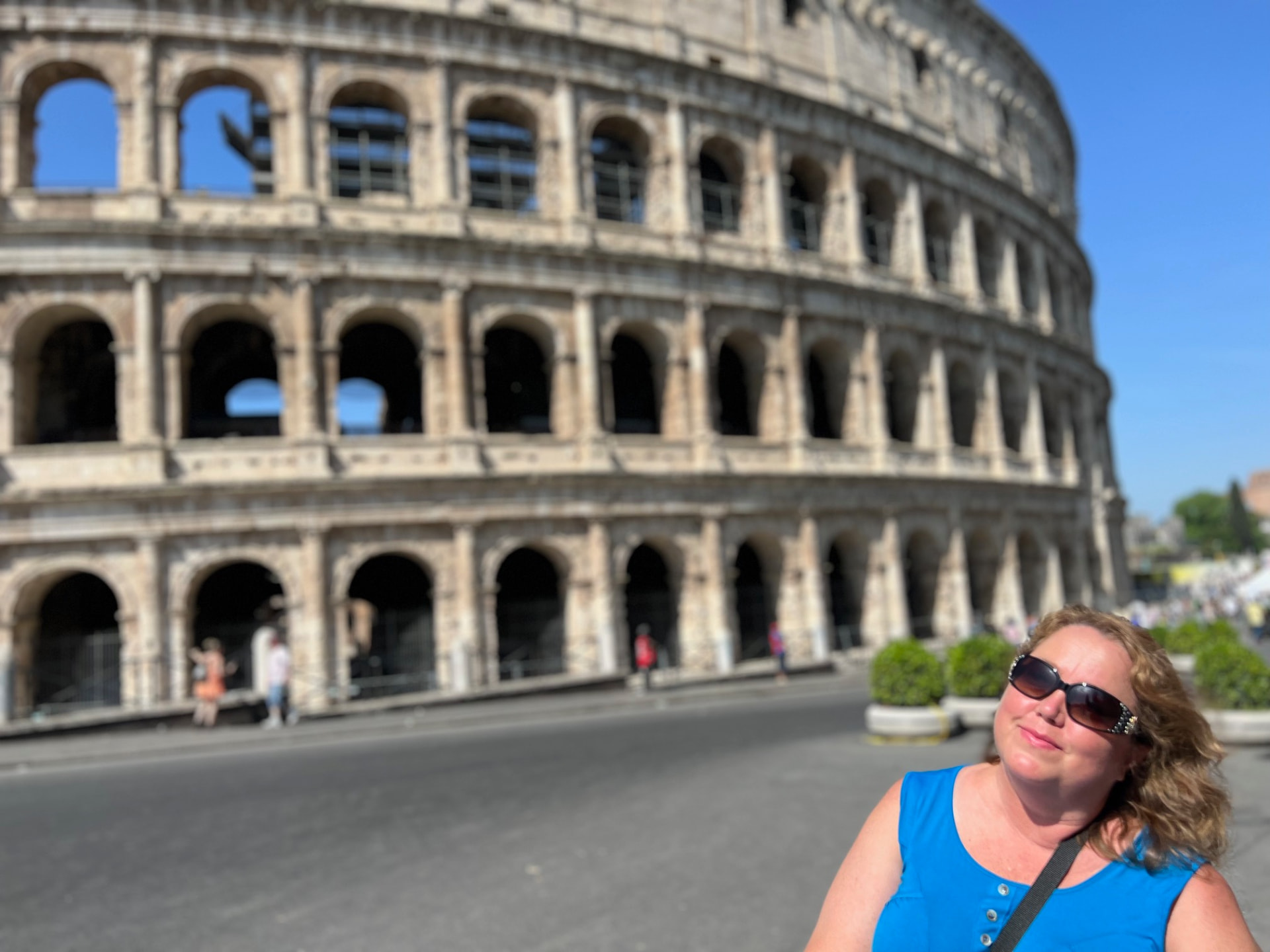
Before the cruise, after the cruise, or both?
Then we get to the next question I hear a lot: “Should we spend those extra days before or after the cruise?”
My answer is that I usually like to book at least part of the land portion before the cruise. I do this for a couple of reasons. First, it protects the cruise. If something goes wrong on the way to Europe, you have built-in time before the ship leaves. Second, you are usually more energetic at the beginning of the trip. However, it is also VERY common to add post-cruise time.
Post-cruise time can be great because you have already had a chance to experience several destinations from the sea. By then, you are more acclimated, more comfortable with the culture, and ready to get off the ship and really immerse yourself in the next stop on your journey.
If your cruise begins in Rome and ends in Athens, for example, it makes perfect sense to spend a few nights in Rome before you sail and then a few nights exploring Athens afterward.
Athens is a perfect example of a destination worth slowing down for after a Mediterranean cruise. By then, you are more acclimated, more comfortable, and ready to really experience the city beyond the port.
How much time you add after the cruise will also depend on how long you have already been traveling and how much longer you can extend your vacation :-).
After a seven-night cruise, you may be excited to keep going. After twelve or fourteen nights, you may be ready to go home.
All of that is perfectly okay and is part of what we work out together when building your trip.
Why the itinerary comes first
This is also why I look at the cruise itinerary before deciding what the pre- and post-stays should be.
If your cruise already includes several Italian ports, maybe we use those extra days somewhere else. If Tuscany has always been on your list, maybe we build that in before sailing from Rome. And if your cruise ends somewhere you have never visited, that may be the perfect place for a post-cruise stay.
There is no perfect formula. That’s why I work with each client to figure out what fits them best and build the trip around the experiences they actually want.
A trip might be 3 nights in Rome + a 10-night Mediterranean cruise, or it could include a full week of Italy before you ever board the ship.
It depends on what you want to see, how much time you have, and how you like to travel.
But one thing I generally would not recommend is spending thousands of dollars to fly all the way to Europe, arriving exhausted the day before your cruise, and heading straight to the ship the next morning. You traveled too far for that, and your trip deserves more.
Give yourself at least two nights before the cruise, and then let’s figure out what else you have always wanted to experience while you’re already there.